
A smile does not need to look perfectly uniform to be attractive. In fact, the most natural-looking cosmetic dentistry usually preserves the small details that make a person’s smile their own. For patients considering veneers in Raleigh, NC, thoughtful planning is often just as important as the material used.
Veneers can change the visible color, shape, size, or alignment of selected teeth. However, they are not the right answer for every cosmetic concern. A dentist must first evaluate the health of the teeth, gums, and bite before recommending treatment.
This guide explains what veneers are, which concerns they may address, what the process can involve, and which questions Raleigh patients should ask before moving forward.
This information is educational and is not a substitute for an examination or personalized advice from a licensed dentist.
What Are Dental Veneers?
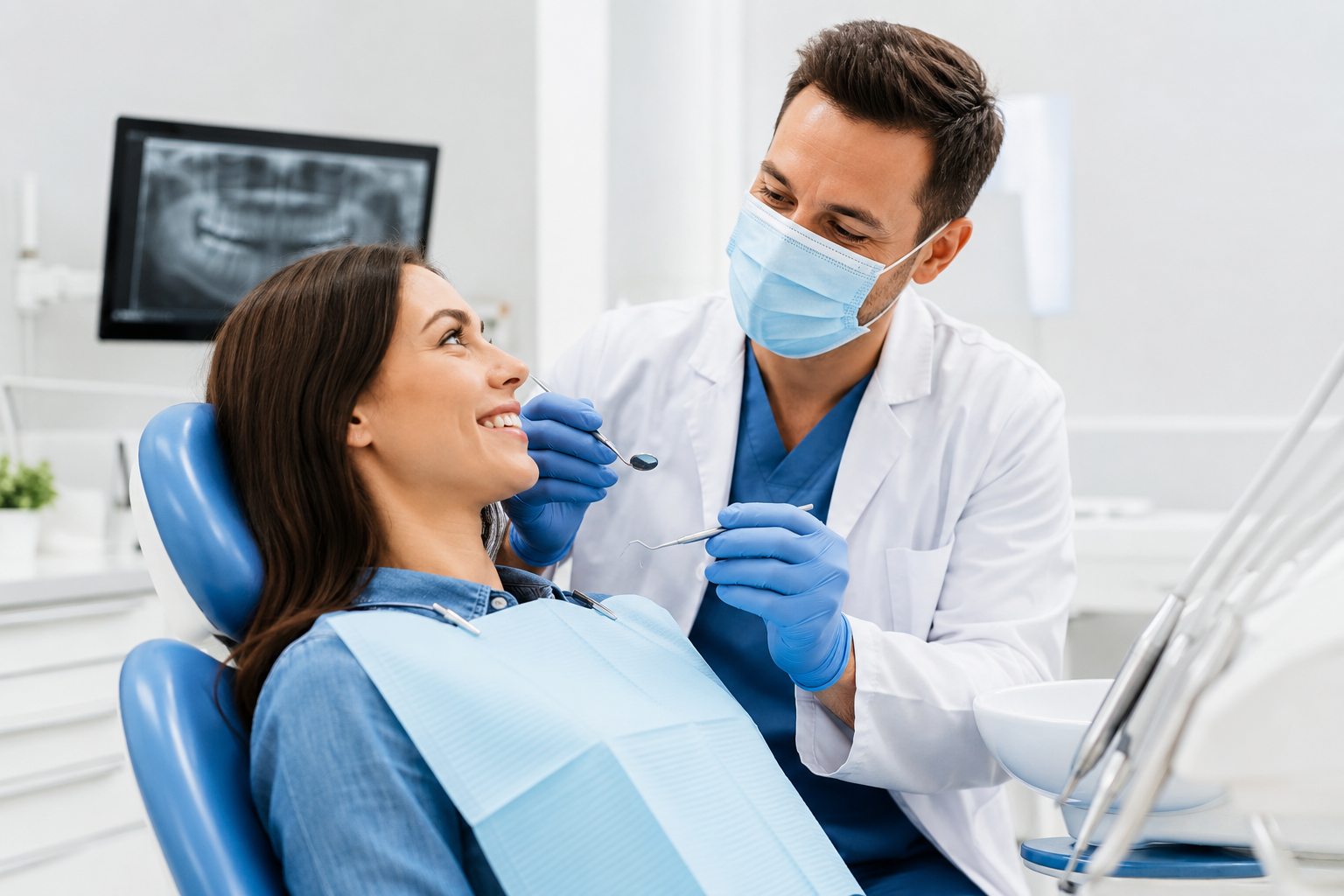
Dental veneers are thin restorations attached to the front surfaces of teeth. They are most often used on teeth that show when a person smiles, such as the upper front teeth.
Instead of covering the entire tooth like a crown, a veneer generally covers the visible front and may wrap slightly around the sides or biting edge. Its design depends on the tooth, the patient’s bite, and the desired cosmetic change.
Porcelain veneers
Porcelain veneers are custom-made restorations created to reproduce the color, translucency, and surface texture of enamel. Their shade and shape can be adjusted to blend with nearby teeth or contribute to a broader smile makeover.
Porcelain is resistant to staining, but it is not indestructible. Like natural teeth and other dental restorations, veneers can chip, crack, loosen, or develop problems around their edges. A systematic review of porcelain laminate veneers identified complications such as fracture, chipping, cracking, debonding, sensitivity, and decay around restorations. Good planning and ongoing dental care help reduce risk, but no restoration comes with a lifetime guarantee.
Composite veneers and bonding
Composite resin can also be applied directly to a tooth to improve its shape or color. This is sometimes called composite veneering or cosmetic bonding. It may require less alteration of the tooth and can often be repaired more easily than porcelain.
However, composite typically does not resist staining or wear as well as porcelain. The best choice depends on the extent of the concern, the patient’s expectations, the bite, the number of teeth involved, and the available budget.
What Cosmetic Concerns Can Veneers Address?
Veneers may be considered for one or more of the following concerns:
- Deep discoloration that does not respond predictably to whitening
- Small chips or worn edges
- Minor gaps between teeth
- Teeth that appear uneven, short, narrow, or irregularly shaped
- Mild visual misalignment
- Older bonding that has become stained or uneven
Veneers can make teeth appear straighter, but they do not physically move the roots or correct significant crowding. Orthodontic treatment may be more appropriate when tooth position or bite function is the primary concern.
Likewise, a heavily filled, cracked, or structurally weakened tooth may need a different type of restoration. Cosmetic treatment should support oral health rather than hide an untreated problem.
Who May Be a Good Candidate for Veneers?
A suitable candidate generally has healthy gums, treatable or minimal decay, enough sound tooth structure to support the restoration, and realistic expectations about the result. The patient must also be willing to maintain regular dental visits and good home care.
A dentist may recommend addressing other issues first if the examination reveals:
- Active tooth decay or gum disease
- Significant enamel loss
- Untreated bite problems
- Frequent clenching or grinding
- Large cracks or weakened teeth
- Oral hygiene concerns that could affect the veneer margins
These findings do not automatically rule out cosmetic treatment. They may simply change the recommended sequence or type of care. For example, a patient who grinds at night may need bite evaluation and a protective nightguard.
What Does the Veneer Process Involve?
Every treatment plan is different, but the process generally starts with a conversation rather than tooth preparation. Patients should have an opportunity to explain what they like about their smile, what they want to change, and what they do not want the result to look like.
1. Consultation and oral health evaluation
The dentist examines the teeth, gums, existing dental work, and bite. Photographs, digital scans, or X-rays may be recommended depending on the patient’s needs. This is also the time to compare veneers with alternatives such as whitening, bonding, orthodontics, or crowns.
2. Smile planning
Good cosmetic planning considers more than tooth shade. Tooth proportions, facial features, lip movement, gum contours, and the amount of tooth visible while speaking can all influence the design.
Connection Dentistry offers a digital smile preview in Raleigh, which may help patients communicate their goals and better understand a proposed direction before treatment. A preview is a planning and communication tool; it should not be viewed as a guarantee that the final result will look exactly the same.
3. Tooth preparation and impressions
Some veneers require the removal of a small amount of enamel so the restorations fit naturally without looking bulky. Other cases may qualify for minimal-preparation or prepless designs. Despite the name, even a “prepless” approach requires careful evaluation and may not be completely reversible.
When custom porcelain restorations are planned, the dentist records the prepared teeth with an impression or digital scan. Temporary veneers may be used while the final restorations are being created.
4. Try-in and placement
Before bonding, the dentist evaluates the veneers’ fit, shape, shade, and relationship to the bite. The teeth are then prepared for adhesive bonding, and the restorations are secured with dental cement. Final adjustments may be made so the bite feels comfortable.
Mild temperature sensitivity or gum tenderness can occur after treatment. Persistent pain, a bite that feels noticeably uneven, swelling, or a loose restoration should be reported to the dentist promptly.
Will Veneers Look Natural?
Natural-looking veneers should complement the face rather than draw attention to the dental work. That does not always mean choosing the brightest shade or making every tooth identical.
Several details affect the final appearance:
- Shade: The color should work with the surrounding teeth, complexion, and the patient’s preferences.
- Translucency: Natural enamel reflects and transmits light in subtle ways.
- Shape: Soft curves, edge contours, and tooth proportions influence whether a smile looks natural.
- Surface texture: Small variations can keep restorations from appearing flat or artificial.
- Gum symmetry: Healthy, well-contoured gums help frame the teeth.
Patients should feel comfortable discussing reference photos and specific concerns. Statements such as “I want a subtle change” or “I do not want an overly white smile” can be more helpful than asking for perfection.
How Much Do Veneers Cost in Raleigh, NC?
The cost of veneers in Raleigh varies because treatment is customized. The total may depend on the material, number of teeth, complexity of preparation, laboratory work, temporary restorations, and whether other dental care is needed first.
Dental insurance often considers veneers cosmetic and may not cover them, although benefits differ among plans. Before treatment begins, patients should request a written estimate that explains what is included. It is also helpful to ask about payment options and the potential future cost of maintenance, repair, or replacement.
Choosing treatment based only on the lowest price can overlook important factors such as diagnosis, smile planning, material selection, bite management, and follow-up care.
How to Care for Veneers
Veneers do not decay, but the natural teeth underneath and around them still can. Daily brushing with a soft-bristled toothbrush, cleaning between the teeth, and attending routine dental visits remain essential.
Patients can also help protect their restorations by avoiding habits that place concentrated force on the front teeth. These include biting fingernails, chewing ice, opening packages with the teeth, or biting directly into very hard objects. Anyone who clenches or grinds should discuss protective options with a dentist.
Whitening products do not predictably change the shade of porcelain. If whitening is part of a smile plan, a dentist may suggest completing it before selecting the veneer shade so the restorations can coordinate with the surrounding teeth.
Frequently Asked Questions About Veneers
Are veneers permanent?
Porcelain veneers are intended as long-term restorations, but they may eventually need repair or replacement. When enamel is removed, the treatment is generally considered irreversible because the prepared teeth will continue to need protection.
Do veneers damage natural teeth?
Conservatively planned veneers are designed to preserve as much healthy structure as practical. However, some cases require enamel removal, and every dental procedure has risks. An examination is necessary to determine whether the expected cosmetic benefit justifies the treatment.
Is getting veneers painful?
Patient comfort is considered throughout treatment, and local anesthetic may be used when teeth require preparation. Some people experience temporary sensitivity or gum tenderness afterward. The patient should contact the dental office if discomfort is severe, worsening, or does not improve as expected.
Can veneers fix crooked teeth?
Veneers can visually improve mild unevenness, but they do not move teeth or correct significant bite problems. Orthodontic care may offer a healthier or more conservative option when alignment is the main issue.
How many veneers does a person need?
There is no standard number. Some patients treat one chipped tooth, while others consider several teeth that appear in their smile. The dentist should evaluate the smile from different angles and explain how treated and untreated teeth will blend together.
Can cavities develop under veneers?
Yes. The veneering material cannot decay, but exposed tooth structure and the area near the restoration’s edge remain vulnerable. Consistent oral hygiene and professional examinations help identify concerns early.
Explore Veneers With a Raleigh Dentist
Veneers can create a meaningful cosmetic change, but the best results begin with a healthy foundation and a plan tailored to the individual. A consultation gives patients the chance to compare options, review likely benefits and limitations, and decide whether treatment fits their goals.
Patients interested in veneers in Raleigh, NC can contact Connection Dentistry to ask questions or request an appointment. The practice is located at 415 Vick Ave, Raleigh, NC 27612. A personalized evaluation can clarify whether porcelain veneers, bonding, whitening, orthodontics, or another approach may be most appropriate.

